City Guide


LGBTQ+ Travel Guide: United States
Federal Legal Situation
Same-sex sexual activity has been legal throughout the US since Lawrence v. Texas (2003), which struck down all remaining state sodomy laws. Same-sex marriage has been legal in all 50 states since Obergefell v. Hodges (June 26, 2015). The Respect for Marriage Act (RFMA), signed by President Biden in December 2022, provides a federal statutory backstop — it repealed the 1996 Defense of Marriage Act (DOMA), requires federal recognition of same-sex marriages, and requires states to recognise same-sex marriages performed in other states. The RFMA's protection is important: if Obergefell were ever overturned, couples married in states where same-sex marriage remained legal would still have their marriage recognised federally and by other states. However, the RFMA would not prevent states from enacting new bans on performing same-sex marriages, and some states still have dormant constitutional bans (from pre-2015 ballot measures) that would technically take effect if Obergefell were reversed.
In employment, Bostock v. Clayton County (2020) established that Title VII of the Civil Rights Act of 1964, which prohibits sex discrimination, also covers sexual orientation and gender identity — meaning LGBTQ+ workers are protected from employment discrimination under federal law. The Trump administration's executive orders have attempted to narrow the application of Bostock (directing agencies to interpret it as not applying to broader contexts), but the Supreme Court ruling itself remains binding precedent.
At the federal level under the current administration (January 2025 onwards): an executive order declared the US government's policy to recognise only two sexes (male and female) and directed agencies to remove recognition of transgender identity; Obama-era executive orders protecting federal contractors from LGBTQ+ employment discrimination were rescinded; transgender military service was banned (upheld by the Supreme Court as a temporary measure allowing the policy to take effect while challenges proceed, with the ban fully implemented by May 2025); federal funding for gender-affirming care for those under 19 was directed to be withheld (partially blocked by injunction); DEI programmes across the federal government were ended. Many of these actions face ongoing legal challenges; the situation continues to evolve.
There is no comprehensive federal LGBTQ+ anti-discrimination law covering housing, public accommodations, and education (the Equality Act, which would have provided this, passed the House in 2021 but did not pass the Senate). Protection in these areas depends on state law and varies dramatically.
Overview of Federal Legal Rights (Sources: Wikipedia, ACLU, HRC, KFF, Lambda Legal)
| Topic | Federal Status (March 2026) |
|---|---|
| Homosexuality / consensual adult same-sex activity | Legal nationwide — Lawrence v. Texas (2003); equal age of consent (varies by state, typically 16–18) |
| Same-sex marriage | Legal in all 50 states — Obergefell v. Hodges (2015); Respect for Marriage Act (2022) provides federal statutory backstop; has not been overturned; some state dormant bans remain on books; legal experts consider immediate repeal unlikely but Justice Thomas's Dobbs concurrence flagged it as a target; estimated 823,000 same-sex married couples in the US |
| Adoption | Legal in all states for same-sex couples, but with significant variation — some states permit religious adoption agencies to refuse same-sex couples; state-level restrictions continue |
| Employment discrimination | Federal protection via Bostock v. Clayton County (2020) — Title VII covers sexual orientation and gender identity in employment; Trump executive orders attempt to narrow application but Bostock ruling stands; no comprehensive federal Equality Act; housing and public accommodation discrimination remain unaddressed federally |
| Gender-affirming care (minors) | State-level bans upheld — US v. Skrmetti (June 18, 2025, 6-3): Supreme Court upheld Tennessee's ban on puberty blockers/hormones for trans minors as constitutional; 25 state bans now in effect; bans in Montana and Arkansas remain blocked by separate court orders; over 100,000 trans youth live in ban states; adult care bans in some states being challenged |
| Trans rights generally (federal) | Severe rollbacks under Trump administration — January 2025 EO declared federal policy of recognising only two biological sexes; trans military service banned (fully in effect May 2025); federal funding for trans youth healthcare directed to be withheld (partially blocked by injunction); no federal gender recognition law; passports only issued with sex assigned at birth; no non-binary gender option on federal documents |
| State variation | Enormous — from "sanctuary states" with robust protections (CA, NY, MA, WA, CO, IL, OR, VT, ME, CT, NJ, MD, NM, NV, HI, MN) to states with extensive anti-LGBTQ+ laws (TX, FL, TN, AL, MS, ID, ND, SD, UT, MT bans blocked, etc.); check state-specific guidance before travelling or relocating; the Movement Advancement Project (lgbtmap.org) maintains a current state-by-state tracker |
Key Organisations
- Lambda Legal (lambdalegal.org): Oldest national LGBTQ+ legal organisation; litigation and advocacy
- ACLU LGBTQ+ Rights (aclu.org/lgbtq-rights): Broad civil liberties advocacy and litigation including Skrmetti challenge
- Human Rights Campaign / HRC (hrc.org): Largest LGBTQ+ civil rights organisation; 3.6 million members; publishes state equality indexes
- GLAAD (glaad.org): Media advocacy and accountability; ALERT Desk tracking anti-LGBTQ+ incidents
- National Center for Transgender Equality (transequality.org): Policy advocacy and resources specifically for trans people
- Movement Advancement Project (lgbtmap.org): Non-partisan think tank; maintains the most comprehensive state-by-state LGBTQ+ policy tracker
- Trans Lifeline (translifeline.org): Peer support hotline staffed by and for trans people; 877-565-8860
- The Trevor Project (thetrevorproject.org): Crisis intervention for LGBTQ+ youth; TrevorLifeline: 1-866-488-7386; TrevorText: text START to 678-678
- Crisis Text Line: Text HOME to 741741
- Emergency: 911
LGBTQ+ Highlights: Cities & Destinations
New York City — The Birthplace of the Modern Movement
New York City (population approximately 8.3 million) is the birthplace of the modern LGBTQ+ rights movement — the site of the Stonewall Inn rebellion of June 28, 1969, now a National Monument, which sparked the movement that produced every subsequent LGBTQ+ civil rights gain in the United States and globally. New York has one of the world's most layered, historically deep, and geographically sprawling LGBTQ+ communities, centred on the West Village (the historic gay neighbourhood around Christopher Street and the Stonewall Inn), Hell's Kitchen (the current main gay neighbourhood along Ninth and Tenth Avenues in the 40s–50s), and Brooklyn's Gowanus, Park Slope, and Bushwick neighbourhoods. New York City Pride (June) is one of the world's largest — the NYC Pride March typically draws millions of spectators along Fifth Avenue; the parallel Queer Liberation March (organised by Reclaim Pride Coalition, without corporate floats or police, returning to the original spirit of the 1970 march) has grown significantly. New York State has comprehensive LGBTQ+ anti-discrimination protections including the GENDA (Gender Expression Non-Discrimination Act, 2019), which adds gender identity to the Human Rights Law.
- Stonewall Inn National Monument (Christopher Street, West Village): The most historically significant site in LGBTQ+ history worldwide — the bar where the June 1969 uprising against police harassment launched the modern movement; now a National Monument (designated 2016, the first US national monument dedicated to LGBTQ+ history); the surrounding Christopher Street and Sheridan Square remain active and welcoming; the adjacent Christopher Street Park has a statue of two same-sex couples
- NYC Pride / Heritage of Pride (June annually): One of the world's largest Pride events — the March on the last Sunday of June draws millions along Fifth Avenue; PrideFest street fair; SummerStage concerts; Dance on the Pier; the Queer Liberation March (second Sunday of June) is a separate, non-commercial, non-police march returning to the political spirit of the original 1970 march; NYC Pride Week runs most of June
- Hell's Kitchen gay scene (Ninth and Tenth Avenues, W 42nd–57th Streets): Manhattan's current main gay neighbourhood — a concentrated stretch of bars, clubs, restaurants, and LGBTQ+-welcoming businesses; more accessible and less expensive than the West Village; close to Midtown, Times Square, and the Theater District; the area is active from afternoon to late night
- Brooklyn LGBTQ+ scene: Brooklyn's queer community — centred on Park Slope (historically strong lesbian community; the long-running lesbian bar Ginger's), Gowanus, Bushwick (queer arts and underground club scene), and Crown Heights — has a different character from Manhattan; more community-oriented, arts-driven, and racially diverse; the Brooklyn Pride parade (June, in Park Slope) is a separate and distinctly neighbourhood-scale event
- Lesbian Herstory Archives (Park Slope, Brooklyn): The world's largest collection of materials by and about lesbians — founded 1974; based in a Park Slope brownstone; open to the public; one of the most extraordinary LGBTQ+ archives in the world
- Culture: New York's concentration of LGBTQ+-relevant cultural institutions is unmatched — the New York Public Library's collections; the Museum of Arts and Design; Lincoln Center; the Metropolitan Museum; MoMA; the Whitney; the Brooklyn Museum (particularly strong on queer art); Broadway and Off-Broadway with consistent LGBTQ+-themed programming; the Tribeca Film Festival; the NewFest LGBTQ+ film festival (November)
San Francisco — The Castro and the Heart of LGBTQ+ America
San Francisco (population approximately 875,000) holds a unique place in LGBTQ+ history — the city that Harvey Milk called "the gay Mecca," the home of the Castro District (the world's first publicly gay neighbourhood), the centre of the AIDS crisis in the 1980s (and the community and activist response to it that changed the world), and the state that gave us Proposition 8 (2008 ballot measure banning same-sex marriage) and then its landmark federal court challenge. California maintains the most comprehensive state-level LGBTQ+ protections in the US — the FAIR Education Act (2011) requires LGBTQ+ history in public schools; the California Healthy Youth Act; explicit trans protections across state government. California has enacted sanctuary policies protecting trans youth and their families from out-of-state legal actions.
- The Castro District: The world's first openly gay neighbourhood — the stretch of Castro Street between Market and 19th Streets, with its rainbow crosswalks, the Castro Theatre (a 1922 movie palace and major arts venue), Milk Plaza (with a Harvey Milk memorial), Twin Peaks Bar (first gay bar in the US with large open windows to the street, 1972), and dozens of bars, restaurants, bookshops, and community organisations; the Human Rights Campaign Action Center and store; the GLBT History Museum (18th Street), the world's first full-scale LGBTQ+ community museum; entirely LGBTQ+-welcoming by definition
- San Francisco Pride (last full weekend of June annually): One of the world's largest Pride events — the parade down Market Street draws hundreds of thousands; the Civic Center festival; a month-long series of community events; the pink triangle on Twin Peaks (a tradition since 1997, re-erected each Pride); Trans March (Friday), Dyke March (Saturday), Pride Parade (Sunday)
- Harvey Milk's legacy: Harvey Milk (1930–1978) — the first openly gay elected official in California, assassinated in November 1978 along with Mayor George Moscone by former Supervisor Dan White; the Harvey Milk Civil Rights Academy (a public elementary school named for him), Harvey Milk Plaza, the Harvey Milk Branch library; his camera shop location at 575 Castro Street; a profoundly moving thread through the entire Castro neighbourhood
- AIDS Memorial Grove (Golden Gate Park): A national memorial to those who died in the AIDS epidemic — a circular grove in Golden Gate Park with stone pathways and inscriptions; a quiet, moving space within one of the world's great urban parks; entirely LGBTQ+-welcoming
- Other SF neighbourhoods: The Mission District (Latinx LGBTQ+ community, murals, Valencia Street); SoMa (South of Market, leather and fetish community, the Folsom Street Fair held annually in September — the world's largest leather/fetish outdoor event, drawing 400,000+ people); the Tenderloin (historically trans community of colour); Haight-Ashbury (counterculture history adjacent to the Castro)
Los Angeles and West Hollywood
Los Angeles (population approximately 4 million city; 13 million metropolitan area) has a LGBTQ+ scene of extraordinary scale and diversity, centred on the incorporated city of West Hollywood (WeHo) — a 1.9 square mile city that incorporated in 1984 specifically to gain local control over its LGBTQ+ and rent-controlled community, which has had LGBTQ+ majority representation on its city council since its founding. The greater LA LGBTQ+ community extends from WeHo's Santa Monica Boulevard strip to Silver Lake (historically the leather/bear community and original LA gay neighbourhood), Echo Park, Los Feliz, Long Beach, and the Eastside. LA Pride (June) is one of the largest in the US. California's trans sanctuary policies and gender-affirming care protections apply throughout the state.
- LA Pride (June annually): One of the largest Pride events in the US — the parade and festival in West Hollywood on the weekend following the NYC Pride March; concerts and events throughout Pride Month in LA; Dyke March (Saturday) and Trans Visibility March; WeHo celebrates all of June as Pride Month
- West Hollywood (WeHo): Santa Monica Boulevard is the main strip — wall-to-wall bars, clubs, restaurants, and boutiques from La Brea to Doheny; the area operates at all hours; nearby Robertson Boulevard, Melrose Avenue, and the Sunset Strip add to the commercial and cultural density; WeHo has the highest concentration of LGBTQ+-owned businesses of any city in the US
- Silver Lake: LA's original gay neighbourhood and current queer arts hub — the Sunset Junction area, the Silver Lake reservoir, the independent café and arts scene; a more bohemian and less commercial character than WeHo; strong trans community presence
- ONE Archives Foundation (USC Libraries): The world's largest archive dedicated to LGBTQ+ history — affiliated with USC; accessible by appointment; extraordinary collections from the entire history of the US LGBTQ+ movement
Chicago
Chicago (population approximately 2.7 million) has one of the US's most established LGBTQ+ communities, centred on Boystown (the North Halsted Street corridor between Belmont and Irving Park Road, the first officially recognised gay village in the US) and the adjacent Andersonville (a neighbourhood with a strong lesbian community and LGBTQ+-welcoming café culture). Chicago Pride (June) is one of the largest parades in the US. Illinois enacted comprehensive LGBTQ+ non-discrimination protections in 2005 (Illinois Human Rights Act) and has transgender-inclusive policies across state services.
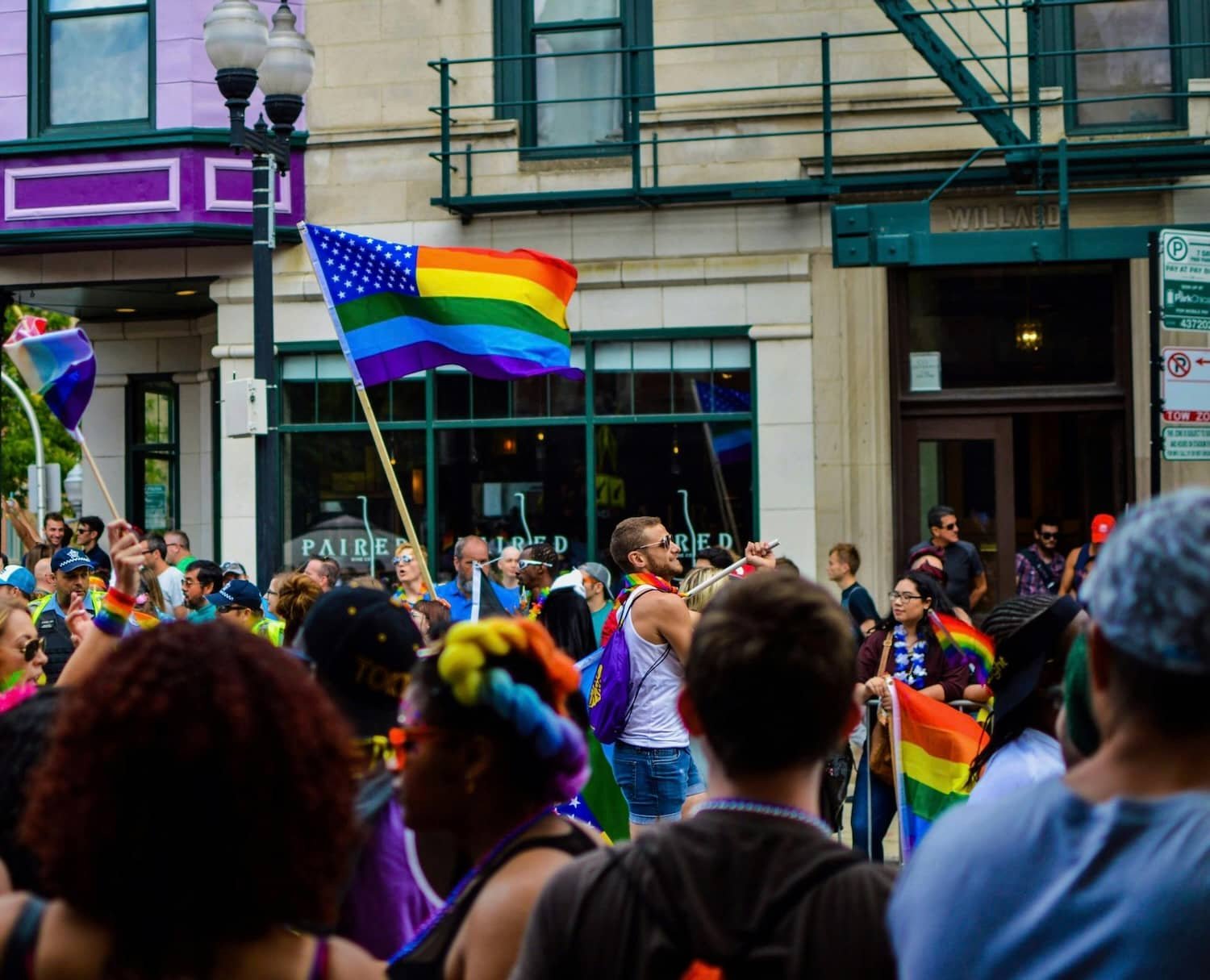
- Chicago Pride Fest and Parade (June annually): One of the largest Pride events in the US — the parade along North Halsted and Broadway; the North Halsted Street festivities; Pride Fest the weekend before the parade; Chicago's Pride events consistently draw 1–2 million people
- Boystown / North Halsted: The North Halsted Street LGBTQ+ neighbourhood — the Rainbow Pylons (14 rainbow-coloured steel pylons along the streetscape), bars, clubs, restaurants, and community organisations; a dense, walkable neighbourhood with 24-hour activity; Chicago's LGBTQ+ community has been rooted here since the 1970s
- Andersonville: Chicago's lesbian community hub — a Scandinavian-heritage neighbourhood on the North Side with a high concentration of LGBTQ+-owned businesses, bookshops, and cafés; home to the Gerber/Hart Library and Archives (LGBTQ+ library and archive, founded 1981)
Classic LGBTQ+ Destinations
Provincetown, Massachusetts — The Original LGBTQ+ Resort Town
Provincetown (P-Town; population approximately 2,900 year-round, swelling to tens of thousands in summer) at the very tip of Cape Cod is the US's most storied LGBTQ+ resort destination — a fishing village that has been a haven for artists, writers, and LGBTQ+ people since the early 20th century; home to the Pilgrim Monument; known for an extraordinary concentration of LGBTQ+-owned accommodation, restaurants, and bars on Commercial Street; Bear Week (July), Women's Week (October), and the Provincetown Film Festival are among the annual LGBTQ+ events. Massachusetts has comprehensive state-level LGBTQ+ protections and was the first US state to legalise same-sex marriage (2004).
Key West, Florida
Key West, the southernmost city in the continental US, has been an LGBTQ+ destination since the 1970s — a laid-back, subtropical island with a historically welcoming atmosphere, Duval Street's bar scene, the Gay and Lesbian Community Center, the Southernmost Point (90 miles from Cuba), and a culture that has long embraced LGBTQ+ visitors. Florida under Governor DeSantis has enacted extensive anti-LGBTQ+ legislation (the "Don't Say Gay" law, trans healthcare bans, drag show restrictions), but Key West has consistently maintained its welcoming atmosphere and local governance has been protective of LGBTQ+ residents; note that the state-level laws apply throughout Florida including Key West. Key West Pride (June) and Fantasy Fest (October, adults-only costuming festival with strong LGBTQ+ participation) are the major annual events. The adjacent Fort Lauderdale and Wilton Manors (a small incorporated city near Fort Lauderdale with the second-highest concentration of LGBTQ+ residents in the US after San Francisco's Castro) are also major LGBTQ+ destinations in South Florida.
Fire Island, New York
Fire Island, a barrier island off Long Island approximately 50 miles east of Manhattan (accessible by ferry from Bay Shore), is the New York metropolitan area's iconic LGBTQ+ beach destination — the communities of Cherry Grove (the first openly gay community in the US, dating to the 1940s) and the Pines (its more glamorous neighbour) draw tens of thousands of LGBTQ+ visitors each summer weekend; the Fire Island National Seashore is federally protected and car-free; the legendary Invasion of the Pines (a drag boat parade from Cherry Grove to the Pines, held around July 4) is one of the most celebrated annual LGBTQ+ events in the New York area. The island's season runs Memorial Day through Labor Day (late May–September).
More US Destinations Worth Knowing
Practical Travel Information
- The US has over 500 commercial airports; major international hubs: New York JFK and Newark (EWR), Los Angeles (LAX), Chicago O'Hare (ORD), San Francisco (SFO), Miami (MIA), Dallas/Fort Worth (DFW), Seattle (SEA), Washington Dulles (IAD) and Reagan National (DCA), Boston Logan (BOS), Atlanta (ATL), Denver (DEN), Honolulu (HNL)
- Currency: US Dollar (USD / $); cards (including contactless) accepted almost universally; tipping culture — 18–20% at restaurants, $1–2 per drink at bars, $2–5 per night in hotels; the US is generally cheaper than Western Europe for accommodation, food, and internal travel
- Language: English throughout; Spanish is widely spoken in many cities (Miami, Los Angeles, San Antonio, New York, Chicago); Hawaii has Hawaiian language cultural presence
- Transport: No intercity passenger rail network comparable to Europe; domestic flights are the primary long-distance option and are reasonably priced; Amtrak serves the northeast corridor (Boston–NYC–Philadelphia–DC) effectively; car rental is essential for many destinations; Uber and Lyft are widely available in cities; most major cities have subway or light rail systems (NYC, DC, Chicago, Boston, SF, LA, Seattle, Atlanta, Miami)
- Visa: Most Western European nationals, Australians, Canadians, Japanese, and South Korean nationals can enter under the Visa Waiver Programme (ESTA, apply in advance at esta.cbp.dhs.gov); others require B-1/B-2 visitor visas; Canadian citizens do not generally need a visa; check current requirements
- Safety considerations for LGBTQ+ travellers: Urban LGBTQ+ neighbourhoods in major cities are generally safe; public displays of affection between same-sex couples are widely accepted in major cities and resort destinations; in rural areas of conservative states (particularly the South, Midwest, and Mountain West) same-sex couples may encounter hostility; trans people face heightened risk in states with hostile legislation; the GLAAD ALERT Desk (glaad.org/alert) tracks anti-LGBTQ+ incidents; in an emergency, call 911
Sources: Wikipedia — LGBTQ rights in the United States · HRC — Background on Trump Day One Executive Orders; Supreme Court Skrmetti ruling response (June 2025) · ACLU — Skrmetti response; Lambda Legal resources · KFF — Gender Affirming Care Policy Tracker; Skrmetti Implications analysis (June/August 2025) · NPR — Supreme Court upholds state bans on transgender care for minors (June 18, 2025) · PBS NewsHour — Supreme Court delivers major blow to transgender rights (June 18, 2025) · TIME — How Gay Marriage Is Under Threat in the Trump Era (June 2025) · The Conversation — Same-sex marriage under attack by state lawmakers (March 2026) · GLAAD — Trump Week 1 executive orders recap · CBS News — Trump administration's divide and conquer approach to LGBTQ rights (June 2025) · Movement Advancement Project (lgbtmap.org) · As of March 2026. Key legal status: Same-sex marriage legal in all 50 states (Obergefell 2015 + RFMA 2022); employment discrimination covered under Bostock (2020); US v. Skrmetti (June 18, 2025, 6-3) upholds state bans on gender-affirming care for trans minors — 25 state bans in effect, Montana and Arkansas bans blocked by separate court orders; Trump EOs from January 2025 removing federal trans recognition and banning military service — many face legal challenges; no federal Equality Act; state law varies enormously; California, New York, Washington and other states have enacted sanctuary policies for trans youth and families. The situation is evolving; consult lambda legal.org, aclu.org/lgbtq-rights, and lgbtmap.org for current guidance.
2026
Saturday 27.06.2026
Pride
-
 All day
Seattle Pride Festival 2026
Seattle Pride Festival 2026 is the largest LGBTQ+ event in the Pacific Northwest of the USA. The two-day…
Seattle, Washington, United States
Sunday 28.06.2026
Pride
-
All day
Seattle Pride Festival 2026
Seattle Pride Festival 2026 is the largest LGBTQ+ event in the Pacific Northwest of the USA. The two-day…
Seattle, Washington, United States