City Guide
LGBTQ+ Travel Guide: Italy
Legal Situation & Safety for LGBTQ+ Travellers
Italy decriminalised homosexuality in 1890, when the Zanardelli Penal Code removed prior criminal penalties — making Italy one of the first countries in Europe to do so. But legislative progress stalled for well over a century. Attempts to introduce civil unions or partnerships in the early 2000s repeatedly failed in parliament. The civil unions law (Legge Cirinnà, Law 76/2016) — passed on 11 May 2016 after years of campaigning — was a landmark: it recognises same-sex couples as a family, provides nearly all the legal rights of marriage (inheritance, social security, health decisions, pensions), and prohibits discrimination. It explicitly excluded joint adoption and assisted reproduction. Stepchild adoption was also cut from the final bill, though the Supreme Court of Cassation ruled in June 2016 that courts could approve it on a case-by-case basis for the child's best interest. Italy is the only major Western European country that has not legislated marriage equality. Same-sex marriages performed abroad are automatically "downgraded" to civil unions upon return to Italy. A referendum petition for marriage equality (launched by Volt Italy on 5 May 2025) gathered 361,505 signatures — short of the 500,000 threshold; Arcigay also noted it would not have been sufficient to fully legalise marriage. Under the Meloni government (in office since October 2022): in early 2023, the government ordered municipalities to stop registering both same-sex parents on civil registers, stripping parental recognition from the non-biological parent in same-sex families — affecting an estimated 150,000 children; in October 2024, surrogacy abroad was criminalised ("universal crime") with penalties of up to two years imprisonment and €1 million fine — disproportionately affecting same-sex male couples since it was already illegal and now eliminates the only route to biological parenthood; in 2025, the education ministry banned gender-neutral language in school communications (not affecting LGBTQ+ topics generally). In April 2025, the Supreme Court of Cassation ruled that "father" and "mother" on Italian ID cards must be replaced with the gender-neutral term "genitori" (parents), finding the original terms discriminatory. In July 2025, the Constitutional Court ruled that a non-biological mother in a same-sex civil union is entitled to the same mandatory 10-day paternity leave as a biological father. These are ongoing legal battles in both directions.
Overview of Legal Rights (Sources: Equaldex, Wikipedia, ILGA-Europe 2025, Advocate)
| Topic | Status |
|---|---|
| Homosexuality | Legal since 1890 (Zanardelli Code) — equal age of consent |
| Same-sex marriage | Not legal — Italy is the only major Western European country without marriage equality; same-sex marriages performed abroad are automatically converted to civil unions; the Court of Cassation has confirmed Italy may use "legislative discretion" to exclude same-sex couples from marriage provided a valid alternative (civil unions) exists; a 2025 referendum petition fell short of signatures required |
| Civil unions (Legge Cirinnà) | Legal since 11 May 2016 — covers inheritance, pensions, social security, healthcare decisions, next-of-kin rights; same-sex couples are formally recognised as a family; does not cover joint adoption or assisted reproduction |
| Same-sex adoption | Joint adoption not permitted; stepchild / "adoption in particular cases" possible via court ruling on a case-by-case basis (established by Court of Cassation 2016); in March 2025 the Constitutional Court ruled that single people (including LGBTQ+ individuals) can access international adoption of abandoned minors; Meloni government has consistently opposed broadening same-sex parental recognition |
| Same-sex parental registration | Blocked since 2023 — Meloni government ordered all municipalities to stop registering both same-sex parents; Milan was the last city to comply; an estimated 150,000 children are affected; April 2025 Supreme Court of Cassation ruling replaced "father/mother" with "genitori" on ID cards; July 2025 Constitutional Court granted non-biological mother in civil union equal paternity leave |
| Surrogacy | Criminalised since October 2024 — surrogacy abroad is now a "universal crime" under Italian law, punishable by up to 2 years imprisonment and €1 million fine for Italian nationals; this eliminates the only biological parenthood route for same-sex male couples since adoption remains blocked |
| Anti-discrimination protections | Partial — employment discrimination based on sexual orientation is prohibited nationally; no national hate crime law specifically covering sexual orientation or gender identity exists (the Zan Bill, which would have introduced this, was defeated in the Senate in October 2021); some regional governments have broader protections |
| Legal gender recognition | Possible via court application — requires medical diagnosis (court can order surgery in some circumstances, though surgery is no longer a universal requirement); no non-binary recognition; regional variation in court practice |
| ILGA-Europe ranking | 21.4% on ILGA-Europe 2025 Rainbow Map — 35th out of 49 European countries; below the EU average of 51.1%; reflecting the combination of civil unions (positive) and the complete absence of marriage equality, hate crime law, and adoption rights (negative) |
| Public opinion | Majority in favour of equality — 2025 Ipsos: 80% support legal recognition of same-sex unions; Eurispes 2024: 66.8% support same-sex marriage (up from 47.8% in 2016); 63% support same-sex adoption; public opinion is significantly ahead of law and government policy |
Safety & Social Attitudes
Italy is broadly safe for LGBTQ+ travellers in major cities and tourist areas. The contrast between public opinion (strongly in favour of LGBTQ+ equality) and government policy (actively hostile to LGBTQ+ family rights) is a defining feature of contemporary Italy. In Milan, Rome, Florence, Bologna, and major tourist destinations, same-sex couples are generally safe and welcome; gay bars, clubs, and Pride events operate openly. In smaller towns, rural areas, and deeply Catholic communities in the south and centre, public displays of affection between same-sex couples may attract negative reactions. Violent crime against LGBTQ+ people is comparatively rare but has occurred; a notable 2020 attack in Pescara left a gay man needing reconstructive surgery. The Meloni government's rhetoric has been cited by advocacy organisations as contributing to a climate of increased transphobia. Italy's LGBTQ+ community is politically active and resilient — Pride parades in over 30 cities, continuing legal battles, and strong civil society organisations (Arcigay, Rainbow Families) are all active forces.
Key Organisations & Support
- Arcigay: Italy's largest LGBTQ+ organisation — national federation with local chapters throughout the country; advocacy, community support, and the primary civil society voice for Italian LGBTQ+ rights; arcigay.it
- Rainbow Families (Famiglie Arcobaleno): Organisation specifically advocating for same-sex families and parental rights; particularly active in the 2023 parental registration crisis; famigliearcobaleno.it
- Rete Lenford: Network of Italian lawyers active in LGBTQ+ rights litigation — important in the ongoing court battles on parental recognition
- Agedo (Associazione Genitori e Amici di Omosessuali): Association for the parents and friends of LGBTQ+ people — support and advocacy
- Emergency: 112 (EU-wide) / 113 (Police) / 118 (Ambulance)
Entry & Practical Information
- Italy is an EU and Schengen member state. EU/EEA/Swiss citizens enter freely. UK citizens can enter visa-free for up to 90 days (post-Brexit, no longer with unlimited free movement). Citizens of the USA, Canada, Australia, and most Western nations enter visa-free for up to 90 days in the Schengen Area.
- The currency is the Euro (EUR). Card payments are widely accepted in cities and tourist areas; cash is useful in smaller towns, local restaurants (trattorie), markets, and rural areas. Italy has historically been cash-heavy but is modernising rapidly.
- The official language is Italian. English is spoken in tourist areas, international hotels, and among many educated Italians in cities; outside tourist contexts, basic Italian is very helpful. Regional dialects remain strong in many areas (Venetian, Neapolitan, Sicilian etc.).
- Italy has over 50 UNESCO World Heritage Sites — the most of any country in the world. Its artistic, archaeological, and culinary heritage is unmatched. The country is best visited with enough time to slow down — rushing Italy misses the point.
LGBTQ+ Highlights: Cities, Prides & Events
Milan — Italy's Gay Capital
Milan (population approximately 1.4 million; 3.2 million in the metropolitan area) is Italy's financial, fashion, and design capital — and unequivocally its most LGBTQ+-friendly city, with the most concentrated and visible gay scene in the country. The neighbourhood of Porta Venezia is the heart of gay Milan: Via Lecco and the surrounding streets form Italy's most coherent gay neighbourhood, with rainbow flags on the metro station walls welcoming visitors, and bars, clubs, cafés, and shops open to the LGBTQ+ community throughout the year. During Pride Week in June, Via Lecco becomes the city's Pride square. Milan is where the contrast between Italy's hostile government and its genuinely progressive urban culture is most striking.
- Porta Venezia / Via Lecco: Milan's gay neighbourhood — the densest concentration of LGBTQ+-friendly bars, clubs, and cafés in Italy; rainbow flags, welcoming venues, and a genuinely community atmosphere year-round; the natural starting point for any LGBTQ+ visit to Milan
- Lelephante (Via Melzo): One of Milan's best-known and most beloved gay bars — a neighbourhood bar with a warm, inclusive atmosphere in the heart of Porta Venezia; popular with locals and visitors alike
- Mono Bar (Via Lecco): Central to the Porta Venezia gay strip — regular events, a welcoming crowd, and a good entry point for exploring Milan's LGBTQ+ nightlife
- Plastic Club (Viale Umbria): One of Milan's most legendary and internationally known gay clubs — a pioneering venue that has been central to Milan's LGBTQ+ nightlife for decades; eclectic music and a devoted following
- Leonardo Da Vinci's Milan: The Last Supper (Cenacolo) — painted in the refectory of Santa Maria delle Grazie (UNESCO, advance booking essential) — is housed in a city where Da Vinci spent his most productive years; historians have noted his likely homosexuality in the context of a city that was, even then, more cosmopolitan than most
- La Scala: The world's most prestigious opera house — year-round opera, ballet, and concert season; the opening night in December (Prima della Scala) is one of the great cultural events of the Italian calendar; book ahead for main season productions
Rome — Eternal City, Ancient Roots, Modern Pride
Rome (population approximately 2.9 million) is Italy's capital and, in some respects, the most LGBTQ+-historically resonant city in the Western world — the capital of an empire where same-sex relationships were common among emperors, senators, and soldiers; the capital of a Church that has spent centuries opposing what it once tacitly accepted. Rome's gay scene is less concentrated than Milan's, but the city hosts Italy's largest Pride event and its summer Gay Village has been a fixture since 2001. The gay scene centres on Via San Giovanni in Laterano (Gay Street), directly in front of the Colosseum — one of the most extraordinary locations for an LGBTQ+ street in the world.
- Via San Giovanni in Laterano (Gay Street): Rome's gay street since the 1960s — a concentration of gay bars and clubs in the shadow of the Colosseum, in the Laterano/Colle Oppio area; one of the great LGBTQ+ cultural curiosities of Rome — the Colosseum as backdrop to gay nightlife
- Muccassassina at Qube: Rome's most legendary gay club night — held every Friday at the Qube club in east Rome; three floors, internationally celebrated, and one of Italy's finest gay club experiences; an institution of the Roman gay scene
- Coming Out (Via San Giovanni in Laterano): A famous Rome gay bar on Gay Street — popular meeting place and reliable anchor of the Via San Giovanni scene; welcoming and sociable
- San Lorenzo and Pigneto neighbourhoods: The most progressive and youth-oriented neighbourhoods of Rome — bohemian, artistic, politically engaged; broadly LGBTQ+-friendly in their overall culture even beyond explicitly gay venues; popular with the community and with younger visitors generally
- Gay Village Testaccio (June–September): Rome's major LGBTQ+ summer festival, held in the Testaccio neighbourhood since 2001 — bars, restaurants, concerts, and cultural events almost every evening throughout summer; the essential Rome LGBTQ+ summer experience
Florence & Bologna
Florence (Firenze) is Italy's Renaissance capital — a small, beautiful city of extraordinary art, the Arno River, terracotta rooftops, and a cultural heritage of global significance. The Oltrarno neighbourhood (south bank of the Arno) has a bohemian, artisan character and a welcoming LGBTQ+ atmosphere. Florence Pride is held annually in June. Bologna, by contrast, is Italy's progressive stronghold — a university city of extraordinary food (the culinary capital of Italy by many accounts), elegant porticoed streets, and a long tradition of left-wing politics and LGBTQ+ activism; home to Italy's first LGBTQ+ community centre (founded by Arcigay Bologna in the 1980s). Bologna Pride is held annually and the city has one of Italy's most active LGBTQ+ civil society scenes.
More Destinations & Islands
- Naples: Italy's most chaotic, vital, and operatic city — a UNESCO Creative City of Music on the Bay of Naples with Vesuvius in the background; a small but growing LGBTQ+ community and a few LGBTQ+-identified bars; Naples Pride is held annually; the city's extraordinary energy, street food (pizza napoletana, the original pizza), and historical depth (the National Archaeological Museum, with the Secret Cabinet of erotic Roman artefacts, is extraordinary) make it unmissable
- Venice: One of the world's most extraordinary cities — a labyrinth of canals, bridges, and Gothic-Byzantine-Renaissance architecture on a lagoon; Venice Carnival (February) is one of Europe's great festivals; Venice Pride is held annually in June; the city is broadly welcoming and the LGBTQ+ community has a long historical presence; less of an explicitly gay scene than Milan or Rome, but one of the world's great destinations regardless
- Viareggio (Tuscany Riviera): A seaside resort on the Tuscan coast north of Pisa — historically LGBTQ+-welcoming, particularly in summer; the Versilia coastal area (Viareggio, Forte dei Marmi) has a long tradition as a LGBTQ+-friendly beach destination in Italy
- Rimini (Emilia-Romagna): Italy's largest Adriatic resort town — a long beach, vibrant nightlife, and a broadly inclusive atmosphere; Rainbow RiminiWellness (a major LGBTQ+ fitness and wellness festival) is held annually; Rimini Pride also takes place in summer
- Catania and Noto (Sicily): Sicily has historically been more LGBTQ+-welcoming than its conservative reputation might suggest; Catania is Sicily's second city — an energetic, creative, and welcoming city at the foot of Etna; Catania Pride is a notable annual event; Noto, the baroque UNESCO city, is a popular LGBTQ+-welcoming destination; Taormina (Sicily's most elegant resort, above the Ionian Sea) has a century-long history as a destination for gay travellers (Oscar Wilde, D.H. Lawrence, and many others visited)
- Brindisi and Gallipoli (Apulia / Puglia): The heel of Italy — Puglia has been growing as a LGBTQ+-friendly tourism destination; Gallipoli on the Ionian coast is one of southern Italy's most celebrated beach destinations with a welcoming LGBTQ+ atmosphere in summer; the trulli of Alberobello (UNESCO) and the masserie of the Valle d'Itria are extraordinary
General Travel Highlights: Italy
Italy has more UNESCO World Heritage Sites (57 as of 2024) than any other country in the world, more internationally renowned museums and galleries than perhaps any other country, and a culinary tradition of such depth and diversity that each of its 20 regions constitutes a distinct gastronomy. The following highlights merely suggest the vastness of what is available.
Rome: The Eternal City
- The Vatican and St Peter's Basilica: The smallest sovereign state in the world, containing the world's most visited museum complex (the Vatican Museums, including the Sistine Chapel — Michelangelo's ceiling, painted 1508–1512; the Last Judgement, 1536–1541; book months in advance for early access); St Peter's Basilica (free) and its dome (Michelangelo's design, the climb to the top offers panoramic views); St Peter's Square (Bernini's colonnade)
- The Forum and Colosseum: The political and commercial heart of the Roman Empire (the Forum Romanum and Imperial Fora) and the Flavian Amphitheatre (the Colosseum, 72–80 CE) — book tickets online to avoid queues; the Via Sacra, the Arch of Titus, the Temple of Saturn, and the Palatine Hill form a single archaeological complex of extraordinary resonance
- Galleria Borghese: One of the world's finest small art museums — Bernini sculptures (Apollo and Daphne; Pluto and Persephone; David), Raphael paintings, Caravaggio works, and Titian; booking mandatory and timed to 2 hours; an essential Rome experience of the very first order
- The Pantheon, Piazza Navona, and Trastevere: The Pantheon (118–125 CE — the best-preserved ancient building in the world, its concrete dome still the largest unreinforced concrete dome in existence, free with reservations); Piazza Navona (Bernini's Fountain of the Four Rivers); Trastevere (Rome's most atmospheric medieval neighbourhood)
Florence and Tuscany
- The Uffizi Gallery: Italy's most important art museum — Botticelli's Birth of Venus and Primavera, Leonardo's Annunciation, Michelangelo's Doni Tondo, Raphael, Titian, Caravaggio, Giotto; book online to skip the queue; one of the great art museums of the world
- Galleria dell'Accademia: Michelangelo's David (1504) — the defining image of the Renaissance, 5.17 metres of Carrara marble; also houses Michelangelo's unfinished Prisoners (Slaves), which show figures emerging from unworked stone; book in advance
- The Duomo and Brunelleschi's dome: Santa Maria del Fiore — the octagonal dome designed by Filippo Brunelleschi (1436) remains the largest brick dome ever constructed; climb the dome's interior for an experience of Renaissance engineering from the inside; the Baptistery's Gates of Paradise (Ghiberti) are across the piazza
- Siena, San Gimignano, and the Val d'Orcia: The Val d'Orcia UNESCO landscape south of Siena is the quintessential Tuscan countryside — cypress-lined roads, medieval hilltowns, vineyards, and olive groves; Siena's Piazza del Campo is one of the world's great medieval squares; the Palio horse race (July 2 and August 16) is Italy's most extraordinary civic ritual
Italian Food
- Italian cuisine by region: Italy does not have a single "Italian cuisine" — it has 20 distinct regional cuisines; Bologna is the epicentre of Italian gastronomy (ragù bolognese, tortellini in brodo, mortadella, tagliatelle al ragù); Naples is the birthplace of pizza (pizza Napoletana — the Associazione Verace Pizza Napoletana protects and certifies the authentic version); Rome has its own pasta traditions (cacio e pepe, carbonara, amatriciana); Venice its sarde in saor and risotto al nero di seppia; Sicily its Arab-Norman-Greek hybrid cuisine; the northern regions (Piedmont, Lombardy) their butter and cream; no single experience of "Italian food" — the regional specificity is the point
- Aperitivo culture: The Italian early evening ritual — a drink (Aperol Spritz, Negroni, prosecco) accompanied by snacks or small plates, typically between 6pm and 9pm; in Milan and many northern cities, the aperitivo buffet can constitute a full meal; a defining aspect of Italian urban social life and one of the great pleasures of visiting Italy
- Coffee culture: The Italian bar (coffee bar) is an institution — espresso (drunk standing at the bar, typically in the morning), cappuccino (only before noon according to Italian convention), macchiato, caffè corretto (with grappa); coffee in Italy is both cheaper and better than in most of the world; the ritual of the morning bar is an essential Italian experience
Sources: Equaldex – LGBT Rights in Italy · Wikipedia – LGBTQ rights in Italy; Recognition of same-sex unions in Italy · ILGA-Europe 2025 Rainbow Map (21.4%, 35/49) · The Advocate – State of LGBTQ+ Rights in Italy as Winter Olympics Begin (February 2026) · PBS News – Italian far-right government limits parental rights of same-sex couples (March 2023) · Illiberalism.org – Meloni's Mark: The Revival of the Traditional Family in Italian Law and Politics (Summer 2025) · Out of Office – Is Italy Safe for Gay Travelers? (November 2025) · IGLTA – Gay Italy travel guide · Housing Anywhere – LGBT in Italy · Intrepid Travel – LGBTQIA+ travel in Italy · Visititaly.eu – Most gay-friendly destinations in Italy 2025 · MisterB&B – Rome Gay Pride 2026; Italy Gay Travel Guide 2026 · As of March 2026
2026
Friday 26.06.2026
Pride
-
 All day
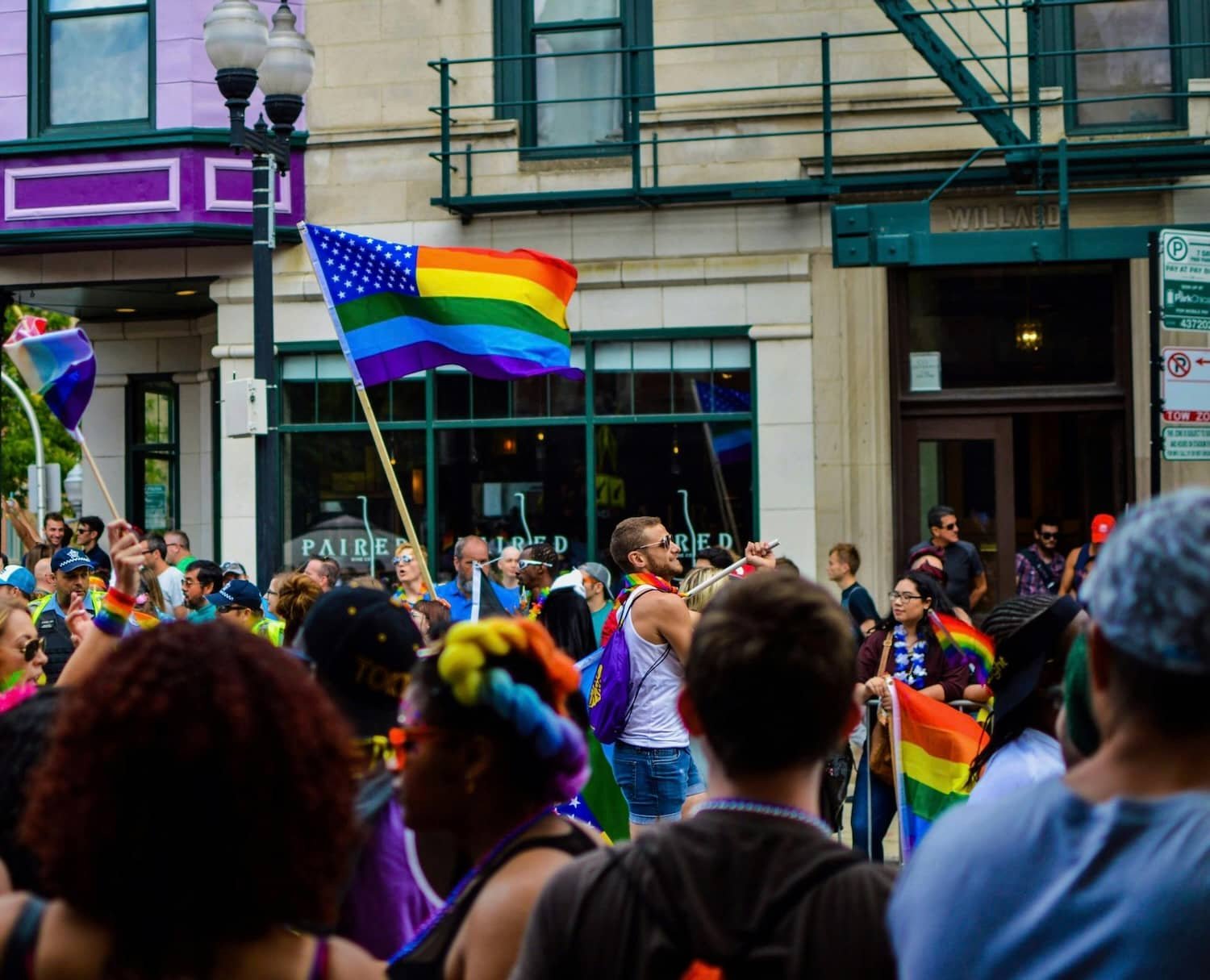
Milano Pride 2026
Milano Pride 2026 in Italy's fashion metropolis is the largest LGBTQ+ festival in Lombardy and one of the…
Milan, Lombardy, Italy
Saturday 27.06.2026
Pride
-
All day
Milano Pride 2026
Milano Pride 2026 in Italy's fashion metropolis is the largest LGBTQ+ festival in Lombardy and one of the…
Milan, Lombardy, Italy