City Guide
Bali, the "Island of the Gods," blends Hindu temples, surf breaks, and LGBTQ+ friendly Seminyak. Bali Pride and beach clubs like Potato Head celebrate diversity.
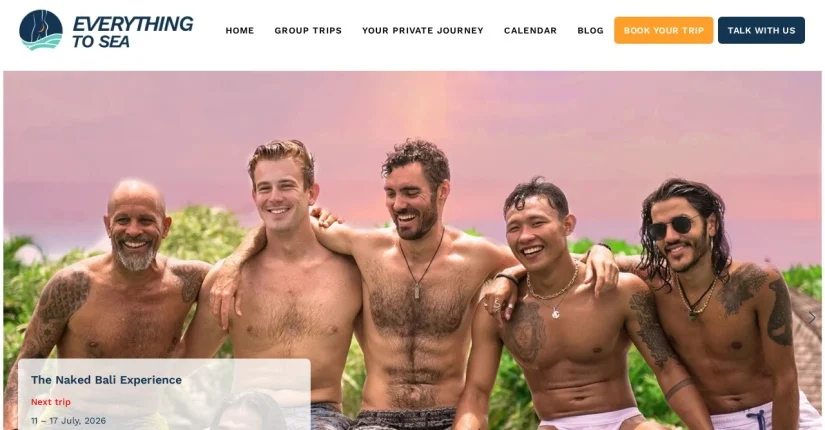

LGBTQ+ Travel Guide: Indonesia
Legal Situation & Safety for LGBTQ+ Travellers
Indonesia's LGBTQ+ legal situation is characterised by a patchwork of national law, provincial Sharia provisions, and the new KUHP criminal code that came into effect on 2 January 2026. At the national level, same-sex activity has not been explicitly criminalised by the national penal code — unlike Malaysia, Indonesia never inherited a British-style sodomy law. Private, non-commercial, consensual same-sex activity between adults remained technically legal under national law, a situation that persisted even as the new KUHP came into force. However, the new code's Article 411 criminalises sex outside marriage with up to one year in prison — and since same-sex marriage is entirely unrecognised in Indonesia, this effectively places all same-sex intimacy in legal jeopardy. Crucially, the law can only be activated by a complaint from a spouse, parent, or child; the government has stated it will not be used against tourists, and enforcement against private behaviour is widely expected to remain minimal, particularly in Bali. However, Human Rights Watch and other organisations have warned about the chilling effect and potential for selective enforcement. Outside the national code, Aceh Province — which holds unique autonomous status and implements full Sharia law (Qanun Jinayat) — criminalises same-sex activity between consenting adults with up to 100 lashes or up to 100 months (approximately 8 years) imprisonment. This law has been enforced: in 2017, two men were publicly caned in Aceh; in October 2025, police in Surabaya arrested 34 men accused of same-sex activity and publicly paraded them in front of the press with their wrists bound. South Sumatra has also had local by-laws criminalising homosexuality since 2002. A growing number of cities and regions across Indonesia have issued anti-LGBTQ+ bylaws. Anti-LGBTQ+ rhetoric from religious organisations — above all the Indonesian Ulema Council (MUI), which has declared LGBTQ+ people "deviant" — shapes public and official attitudes. The government has censored media and blocked apps and websites with LGBTQ+ content since 2016; in 2025, a new bill was being discussed to ban all online LGBTQ+ content across social media and streaming platforms. Conversion therapy is not banned and is practiced. There are no anti-discrimination protections based on sexual orientation or gender identity at any level of government.
Overview of Legal Rights (Sources: Equaldex, Wikipedia, HRW, Outright International)
| Topic | Status |
|---|---|
| Homosexuality (national level) | Not explicitly criminalised at national level — however the new KUHP (in force 2 January 2026, Art. 411) criminalises sex outside marriage (up to 1 year imprisonment); since same-sex marriage is banned, all same-sex intimacy is technically covered; prosecution requires a complaint from a spouse, parent, or child; a proposed explicit gay sex criminalisation was dropped from the final code following civil society pressure |
| Aceh Province | Explicitly illegal — Qanun Jinayat (Sharia criminal law, in force since 2015): up to 100 lashes or up to 100 months (~8 years) imprisonment for consensual same-sex acts; actively enforced (public canings documented); LGBTQ+ travellers should not visit Aceh under any circumstances |
| South Sumatra | Illegal under provincial by-law since 2002 — avoid |
| Same-sex marriage / partnership | No recognition of any kind — 2023 Pew survey: 95% of Indonesians oppose same-sex marriage |
| Anti-discrimination protections | None — no legal protections against discrimination based on sexual orientation or gender identity at any level of government; Indonesian Ulema Council (MUI) has declared LGBTQ+ people "deviant" |
| Transgender (waria) | Complex — waria (a traditional Indonesian third-gender identity) has historically had some cultural acceptance; legal gender change possible after sex reassignment surgery and court approval; however discrimination and harassment have increased sharply since 2016; the Jakarta Social Agency declared waria "socially dysfunctional" in 2018; raids on trans women have occurred; the waria madrasa in Yogyakarta is a unique institution |
| Media censorship | Extensive — LGBTQ+ content censored in media since 2016; Grindr banned; websites and social media content blocked; 2025 bill under discussion to ban all LGBTQ+ content on social media and streaming platforms; broadcasting commission prohibits depicting LGBTQ+ behaviour as "normal" |
| Conversion therapy | Not banned — practiced by religious groups and mental health professionals; exorcism practices and religious camps used on trans individuals |
| Social attitudes | Strongly negative nationally — 2025 Pew: 93% "morally unacceptable"; 2024 survey: 94% would be uncomfortable if child came out; 38% believe same-sex relations should be criminal; significant regional variation: Bali and major tourist areas are considerably more open |
Safety & Social Attitudes
The new KUHP's criminalization of extra-marital sex is a real legal development that LGBTQ+ travellers must understand. Equaldex notes that based on the text of Articles 411–412 and their explanatory notes, same-sex couples are technically outside the complaint-based mechanism (which specifies heterosexual partners), meaning prosecution of foreign gay tourists specifically under Article 411 would be legally complex. The Indonesian government has repeatedly stated that tourists' marital status will not be checked at hotels. However, Human Rights Watch and other organisations caution that the law's vague framing opens the door to selective enforcement. Practical risk for LGBTQ+ tourists staying in Bali and behaving with normal discretion is assessed as low by most travel analysts. Risk outside Bali, and particularly at any visible LGBTQ+ gathering, is meaningfully higher.
Key Organisations & Support
- Arus Pelangi (Jakarta): Indonesia's principal LGBTQ+ human rights organisation — advocacy, legal support, and community organising; has been active through the deteriorating political climate since 2016
- GWL-INA Network: Network of organisations working with gay men and transgender women on HIV/AIDS, health, and rights
- Indonesian emergency: 112 (national emergency) / 110 (Police) / 119 (Ambulance)
- For LGBTQ+ travellers in distress: Contact your country's embassy or consulate; in Bali, the consular presence of many Western countries (USA, Australia, UK, EU member states) is significant given the volume of tourism
Entry & Practical Information
- Indonesia has a complex visa system. Citizens of many countries can access the Visa on Arrival (VoA) at major entry points including Bali's Ngurah Rai International Airport, Jakarta's Soekarno-Hatta, and other major gateways — typically 30 days, extendable once. Visa-free access applies to a smaller number of nationalities. Check current requirements at imigrasi.go.id or your country's foreign ministry; regulations change periodically. An e-Visa is available for some nationalities.
- The currency is the Indonesian Rupiah (IDR). Cash is widely used throughout Indonesia, particularly outside major hotels and tourist areas. ATMs are plentiful in Bali and other tourist areas; card acceptance is growing. Note that Indonesian Rupiah is a high-denomination currency — 1 USD ≈ approximately 16,000 IDR; prices can seem deceptively large in nominal terms.
- The official language is Indonesian (Bahasa Indonesia) — a standardised form of Malay; one of the world's most accessible major languages to learn basics of. English is widely spoken in Bali's tourist areas, Jakarta's business districts, and major tourist sites; outside these contexts, basic Bahasa Indonesia is very helpful. Note that over 700 distinct languages are spoken across the archipelago.
- Grindr is officially banned in Indonesia. VPN services are widely used to access it and other blocked content; VPN use is technically in a legal grey area. Exercise caution with hookup apps in Indonesia outside Bali — the Surabaya raid in October 2025 involved men who were reportedly identified through such apps.
LGBTQ+ Highlights: Bali & Beyond
Bali — Asia's Most Celebrated Gay Island
Bali is one of the most popular tourist destinations in the world and, for LGBTQ+ travellers, the only part of Indonesia where a fully open visit is realistically possible. The island's Hindu cultural majority (Bali is the only majority-Hindu province of Indonesia, approximately 83% of its roughly 4.3 million residents), its deep integration into international tourism, and its economic dependence on foreign visitors have created an environment that functions quite differently from the rest of the country. Gay tourists have been visiting Bali for decades, and the tourism infrastructure — hotels, villas, restaurants, and nightlife — has accommodated this with genuine warmth. Same-sex couples can share rooms in all major hotels, resorts, and most villas without difficulty. The KUHP's marital status provisions are not being enforced against tourists by the Balinese hospitality industry. The social norms around public affection remain conservative (as across Indonesia), but within LGBTQ+ venues in Seminyak, self-expression is free and openly celebrated.
- Seminyak — Jalan Camplung Tanduk (Dyana Pura Road): The unofficial gay strip of Bali — a concentration of gay bars, drag shows, LGBTQ+-friendly beach clubs, restaurants, and nightlife on and around Jalan Camplung Tanduk in Seminyak's Double Six Beach area; operates openly and has been a fixture of Bali's gay scene for many years; Bali Joe Bar, Mixwell, and other venues here host regular drag shows and LGBTQ+ events
- Bali Joe Bar (Seminyak): One of Bali's best-known gay bars — regular drag shows, cocktails, and a welcoming mixed international and local crowd; a landmark of the Seminyak gay scene
- Mixwell (Seminyak): Popular LGBTQ+-friendly bar in Seminyak — regular events, private parties, and a comfortable space for the community
- Batu Belig Beach: The best-known gay beach in Bali — informal LGBTQ+-popular stretch of beach north of Seminyak; gay-friendly beach bars and sun loungers; operates as a de facto gay gathering spot without significant interference
- Double Six Beach (Seminyak/Legian): The beach at the northern end of Seminyak — popular with LGBTQ+ visitors; various beach clubs along this stretch have welcoming reputations
- Ubud: Bali's cultural and artistic heart — 45 minutes north of Seminyak in the rice-terrace highlands; temples, traditional dance, galleries, yoga retreats, and organic restaurants; a more serene, cultural alternative to Seminyak's nightlife; the Ubud Writers and Readers Festival has included LGBTQ+ programming; very welcoming to international LGBTQ+ visitors in the accommodation and restaurant sector, though there is no dedicated gay scene
- Kuta: The main beach resort area of southern Bali — Australia-facing, tourist-heavy, and broadly welcoming to LGBTQ+ visitors in hotel accommodation; busier and more chaotic than Seminyak; some LGBTQ+-friendly clubs in the area
- Kerobokan: The residential neighbourhood between Seminyak and Canggu — villa-dense area popular with LGBTQ+ visitors seeking private accommodation with pools; many villas here cater without issue to same-sex couples
Yogyakarta — Culture, Art, and an Underground LGBTQ+ Community
Yogyakarta (population approximately 3.7 million in the greater area) is the cultural and educational capital of Java — home to two UNESCO World Heritage Sites (Borobudur and Prambanan), the Kraton (sultan's palace), a renowned batik tradition, and some of Indonesia's best universities. It also has Indonesia's most visible — albeit small and largely underground — LGBTQ+ community outside Bali, historically including activist groups and advocacy organisations. Importantly, Yogyakarta is home to the world's only madrasa for transgender people — Al-Fatah Islamic Boarding School, established to provide Quranic education and a safe community for waria (Indonesia's traditional third-gender community). However, the climate has become more hostile since 2016; LGBTQ+ visitors to Yogyakarta should exercise considerably more discretion than in Bali. Explore the city's extraordinary cultural heritage — the temples, markets, wayang kulit (shadow puppet) performances, and batik workshops — rather than seeking out an LGBTQ+ nightlife scene that is not safely accessible to visitors.
Other Destinations
- Jakarta (Java): Indonesia's capital (population approximately 35 million in the greater metropolitan area) — a megacity of extraordinary energy and chaos; there is a small underground LGBTQ+ scene but it operates with significant risk; police raids on gatherings have been documented throughout 2024 and 2025 (including the June 2025 villa raid of 75 people near Jakarta); LGBTQ+ visitors to Jakarta for business or transit should maintain complete discretion; the city has world-class museums (National Museum), the old colonial quarter of Batavia (Kota Tua), and some of Southeast Asia's most dynamic street food, but it is not an LGBTQ+-friendly leisure destination for open travel
- Lombok: The island immediately east of Bali — primarily Muslim, more conservative than Bali; the Gili Islands (Gili Trawangan, Gili Air, Gili Meno) attract an international backpacker crowd and are broadly welcoming to LGBTQ+ visitors in their international-facing accommodation and beach bar scene, though no dedicated LGBTQ+ venues exist; exercise normal Indonesian discretion
- Komodo National Park / Flores: Home of the Komodo dragon — one of the world's great wildlife experiences; the national park encompasses several islands; broadly welcoming to international LGBTQ+ tourists in the tourist accommodation sector; complete discretion required
- Raja Ampat (West Papua): The world's most biodiverse marine environment — extraordinary diving and snorkelling in remote island chains off the Bird's Head Peninsula; tourist accommodation is welcoming to international visitors; the remoteness and predominantly Christian local population create a different context from Java; discretion required
General Travel Highlights: Indonesia
Setting the complex LGBTQ+ landscape aside for a moment, Indonesia is one of the world's most extraordinarily diverse and beautiful travel destinations — a country where ancient Hindu-Buddhist kingdoms, Islamic civilisation, Dutch colonial history, and hundreds of distinct indigenous cultures overlap across 17,000 islands and six time zones.
Bali's Cultural Landscape
- Tanah Lot Temple: The iconic sea temple on a rocky outcrop in the ocean off western Bali — surrounded by waves at high tide, accessible on foot at low tide; the sunset here is one of Bali's quintessential images
- Ubud and the rice terraces: The Tegallalang rice terraces north of Ubud are among Bali's most photographed landscapes; the Campuhan Ridge Walk through rice fields above Ubud is one of the best short walks in Bali; the Sacred Monkey Forest Sanctuary in Ubud centre; the Pura Dalem Agung Padangtegal temple complex
- Tirta Empul (Holy Water Temple): The spring-fed purification pools at this 10th-century water temple are used by Balinese Hindus for ritual bathing; visitors can participate in the purification ceremony (with appropriate respect for the religious context)
- Mount Batur (Gunung Batur): Active volcano in the centre of Bali — pre-dawn trekking to the summit (approximately 2–3 hours from the trailhead) for sunrise views over the caldera lake and across Bali; guided ascents depart around 3–4am; one of Bali's most rewarding experiences
Java's UNESCO Heritage
- Borobudur (Central Java, UNESCO): The world's largest Buddhist temple — a 9th-century Mahayana Buddhist stupa and mandala rising from the Kedu Plain, with 2,672 relief panels and 504 Buddha statues arranged over nine terraced platforms; one of the greatest monuments of human civilisation; most dramatically experienced at sunrise, when the temple emerges from mist above the surrounding forest; 90 minutes from Yogyakarta
- Prambanan (Central Java, UNESCO): The largest Hindu temple compound in Indonesia — a 9th-century complex dedicated to the Trimurti (Brahma, Vishnu, Shiva), with the 47-metre Shiva tower at its centre; 17 km from Yogyakarta city centre; the annual Ramayana Ballet performed against the Prambanan backdrop at full moon is one of the great cultural performances in Asia
- Mount Bromo (East Java): An active volcano in the Bromo-Tengger-Semeru National Park — the turquoise crater lake, the surrounding Sea of Sand, and the vast caldera with the Tengger people's Pura Luhur Poten temple create one of the most otherworldly landscapes in Asia; pre-dawn jeep tours from Probolinggo for sunrise over the crater rim are a classic East Java experience
The Outer Islands
- Komodo National Park (Flores): The habitat of the Komodo dragon — the world's largest living lizard (up to 3 metres); ranger-guided trekking on Komodo and Rinca islands; the surrounding waters contain some of the most biodiverse coral reefs on earth; accessible by liveaboard diving trip from Labuan Bajo (Flores) or from Bali by air and boat
- Raja Ampat (West Papua): The world's top-rated diving destination — approximately 1,500 species of fish and 700 species of coral in the Bird's Head Seascape; remote island resorts accessible by small plane to Sorong and then boat; liveaboard diving is the optimal way to explore; spectacularly beautiful above and below water
- Lake Toba (North Sumatra): The world's largest volcanic lake, formed in a supervolcanic eruption approximately 74,000 years ago — Samosir Island (roughly the size of Singapore) sits in the middle; the Batak people's culture, architecture, and cuisine are distinctive and rewarding; accessible by flight to Silangit or from Medan; note that North Sumatra is considerably more conservative than Bali
Balinese Food & Culture
- Balinese cuisine: Distinct from Indonesian food generally — built around the ceremonial babi guling (suckling pig, roasted on a spit with turmeric, lemongrass, ginger, and Balinese spices; one of the island's great dishes), bebek betutu (slow-cooked duck packed with spices and wrapped in banana leaf), lawar (a ceremonial dish of mixed vegetables, coconut, and minced pork or chicken), and sate lilit (minced fish or meat satay formed around bamboo skewers); nasi goreng (fried rice) and mie goreng (fried noodles) are universally available throughout Indonesia; the warung (small local restaurant) is the authentic way to eat across Bali and Indonesia
- Balinese Hindu ceremonies: Bali's religious life is extraordinary in its density and visibility — odalan (temple anniversary festivals) occur constantly throughout the island; the Galungan and Kuningan festivals (when the spirits of ancestors return to earth, celebrated with penjor bamboo poles lining every road) are among the most spectacular religious celebrations in Asia; Nyepi (the Balinese Day of Silence — the Balinese New Year) is the one day each year when all of Bali goes silent (no lights, no movement, no noise, flights cancelled, internet cut); an extraordinary and moving experience for visitors who are present
Sources: Equaldex – LGBT Rights in Indonesia (equaldex.com/region/indonesia) · Wikipedia – LGBTQ rights in Indonesia; Homosexuality in Indonesia · Human Rights Watch – Indonesia LGBT rights coverage · Outright International – Indonesia · Out of Office – Gay Travel in Indonesia: Law vs Reality (September 2025) · PBS News / AP – Indonesia's new penal code takes effect (January 2, 2026) · Viceroy Bali – Is Bali Gay Friendly? (September 2023) · Bali.live – LGBTQ+ Indonesia (April 2024) · Queer in the World – Gay Indonesia (December 2023) · As of March 2026. Note: The legal situation in Indonesia is actively evolving. Always check current travel advisories from your government's foreign ministry before visiting.