City Guide
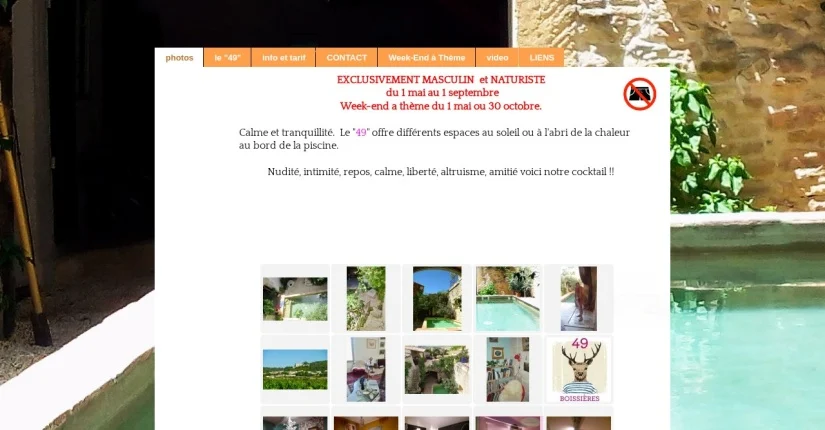
Boissières, a Gard commune, offers vineyard tours and Romanesque churches. A peaceful stop on the Languedoc wine route.
LGBTQ+ Travel Guide: France
Legal Situation & Safety for LGBTQ+ Travellers
France's LGBTQ+ legal record is one of the longest and most significant in the world. The revolutionary decriminalisation of 1791 was not without later reverses — a discriminatory age of consent for same-sex activity persisted until 1982, and anti-LGBTQ+ policing under the Mirguet Amendment (1960–1980) targeted public indecency among same-sex couples. But modern France has built a comprehensive framework. Discrimination based on sexual orientation has been prohibited since 1985; gender identity since 2012 (updated to 2016). The PACS (Pacte Civil de Solidarité) civil partnership, introduced in 1999, was a landmark providing legal recognition and benefits to same-sex couples. France became the 13th country in the world to legalise same-sex marriage on 18 May 2013 (Law No. 2013-404, passed 331–225 in the National Assembly), including joint adoption rights. In 2010, France became the first country in the world to remove transsexualism from its official list of mental illnesses. Since 2017, transgender people can change their legal gender via a court procedure without surgery or medical diagnosis. Conversion therapy is banned. Non-binary gender recognition remains the principal outstanding gap — a 2023 European Court of Human Rights ruling upheld that France is not required under the Convention to introduce a third gender marker, leaving this as a domestic policy question.
Overview of Legal Rights (Sources: Equaldex, Wikipedia)
| Topic | Status |
|---|---|
| Homosexuality | Legal since 1791 (French Revolution) — first country in the world to decriminalise homosexuality; equal age of consent (15) since 1982 |
| PACS (civil solidarity pact) | Legal since 1999 — available to both same-sex and different-sex couples; still available alongside marriage as a civil partnership option |
| Same-sex marriage | Legal since 18 May 2013 — 9th European country and 13th in the world; passed 331–225 in the National Assembly under President François Hollande; includes joint adoption rights; applies in Metropolitan France and all overseas departments and territories |
| Same-sex adoption | Full joint adoption legal since 2013; school enrollment forms use "parent 1" and "parent 2" (since 2019) |
| Anti-discrimination protections | Comprehensive — sexual orientation protected since 1985; gender identity since 2012; gender expression since 2016; covers employment, housing, goods and services; homophobic comments criminalised (€45,000 fine and/or 12 months prison) since 2004 |
| Hate crime protections | Sexual orientation and gender identity covered as aggravating factors; homophobic and transphobic attacks prosecuted; SOS Homophobie reported 186 physical attacks in 2024 |
| Right to change legal gender | Legal since 2017 without surgery — requires a court procedure to change gender marker and first name; no surgery, sterilisation, or medical diagnosis required; sex reassignment surgery is state-funded through the Sécurité Sociale |
| Trans depathologisation | France became the first country in the world to remove transsexualism from its official list of mental illnesses in 2010 |
| Non-binary recognition | Not legally recognised — France's binary legal system does not provide a third gender marker; ECHR ruled in 2023 (Y. v. France) that this does not violate the European Convention on Human Rights |
| Conversion therapy | Banned — France advocates at EU level for a universal conversion therapy ban across all member states |
| Military service | Open service permitted |
Safety & Social Attitudes
France is broadly welcoming for LGBTQ+ visitors — particularly in cities. A 2013 Pew Research Center survey found 77% of French people believed homosexuality should be accepted by society, one of the highest rates among the 39 countries surveyed. French culture's emphasis on personal privacy and discretion (la vie privée) means that LGBTQ+ people generally live openly in cities without hostility. Paris, in particular, is one of the world's genuinely gay-friendly cities — PDA is entirely comfortable in Le Marais, central Paris, and throughout the capital. In rural areas and conservative religious communities (particularly in parts of Brittany and the south), social attitudes are more conservative but confrontation is rare. SOS Homophobie's 2024 report documented 186 physical attacks — a genuine concern that reflects ongoing challenges despite the legal framework.
Key Organisations & Support
- SOS Homophobie: France's leading organisation documenting and combating homophobia and transphobia — annual report, helpline, legal resources; sos-homophobie.org
- InterLGBT: The main umbrella organisation for LGBTQ+ associations in France — coordinates Paris Pride (Marche des Fiertés) and national advocacy
- Association Paris Diversité / Paris LGBT: Official Paris tourist authority partner for LGBTQ+ tourism — lists and promotes over 250 LGBTQ+-friendly venues
- Emergency: 15 (SAMU medical emergency) / 17 (Police) / 18 (Fire) / 112 (EU-wide)
Entry & Practical Information
- France is an EU and Schengen member state. EU/EEA/Swiss citizens enter freely. Citizens of the USA, UK, Canada, Australia, and most Western nations enter visa-free for up to 90 days in any 180-day Schengen period.
- The currency is the Euro (EUR). Card and contactless payments are widely accepted; cash is still useful for smaller restaurants, boulangeries, and markets. Note: some French restaurants and small shops still prefer cash or have minimum card amounts.
- The official language is French. English is spoken in international business, hotels, and tourism contexts, but France has a strong national commitment to the French language — making some effort in French, however basic, is genuinely appreciated and often rewarded with warmer service.
- France includes overseas departments and territories (DOM-TOM) where French LGBTQ+ law applies fully: Guadeloupe, Martinique, French Guiana, Réunion, and Mayotte are all departments of France; French Polynesia, New Caledonia, Saint Martin, and others are collectivities. The first same-sex marriage in Mayotte — France's majority-Muslim department — was performed in September 2013.
LGBTQ+ Highlights: Cities, Prides & Events
Paris — Le Marais & the City of Light
Paris is one of the world's great LGBTQ+ cities — a capital that has been a beacon for queer culture, exile, and liberation for centuries. The city's LGBTQ+ geography has shifted through history — from the Tuileries gardens to the Champs-Élysées, to Montmartre-Pigalle, to Montparnasse and Saint-Germain, and since the 1980s to Le Marais. This historic quarter of the 3rd and 4th arrondissements, once aristocratic then working-class, began its transformation into Paris's gay neighbourhood when queer traders and activists settled here for its then-affordable rents and unique medieval character. Today, over 250 LGBTQ+-friendly venues operate across Paris, with Le Marais as the undisputed heart.
- Rue Sainte-Croix-de-la-Bretonnerie & Rue des Archives (Le Marais): The principal arteries of gay Paris — a concentration of gay bars, cafés, restaurants, and boutiques; the Cox bar with its famous terrace, Les Marronniers (rainbow flag–clad patio, legendary for people-watching), RAIDD Bar (famous for its shower shows and dancing), and numerous other venues cluster along and around these streets; the Place des Vosges — Paris's oldest planned square — is steps away
- Stonewall Riots Square (Le Marais): Between the bars of Rue des Archives, a square commemorates the Stonewall Riots and carries a plaque honouring Gilbert Baker (1951–2017), creator of the rainbow flag
- Memorial "To the Forgotten!" (Port de l'Arsenal, since May 2025): A new 3-tonne steel monument by artist Jean-Luc Verna — a monumental magic wand — inaugurated on IDAHOTB 2025, honouring homosexual victims of deportation and LGBTQ+ people persecuted throughout history
- Gibus Club: One of Paris's most famous gay clubs — hosts huge Pride afterparties until sunrise; long-running institution of Parisian LGBTQ+ nightlife
- Les Halles area (Rue des Lombards): Paris's original gay district, still vibrant — Le Banana Café (wild cabaret, drag queens, go-go dancers), La Boîte (music-driven intimate gay bar), and a cluster of nightlife venues; old-school Parisian queer atmosphere with contemporary energy
- Pigalle / Rue Pigalle: A second epicentre of LGBTQ+ nightlife — La Machine du Moulin Rouge (multi-level club under the iconic red windmill, with Pride special events); the broader Pigalle area is known for its relaxed, mixed, culturally diverse nightlife
- Centre Pompidou: France's great museum of modern and contemporary art in the heart of Le Marais — the exoskeleton of exterior escalators and exposed pipes remains architecturally controversial since 1977; its collections include significant LGBTQ+ artistic voices and regular queer-themed exhibitions
Lyon — Gastronomic Capital with a Gay Heart
Lyon is France's second city by influence and consistently considered its gastronomic capital — a city of extraordinary food culture, silk-weaving heritage, Roman history, and a vibrant LGBTQ+ community. The gay scene clusters around the Presqu'île (the narrow peninsula between the Rhône and Saône rivers) and the trendy Croix-Rousse hill district. Lyon Pride is held annually in late June.
- Lyon's gay bars and clubs are concentrated in the city centre and the Presqu'île — a welcoming and relatively compact scene by French standards
- Lyon was Bertrand Delanoë's (the openly gay former Mayor of Paris) home city; the broader Auvergne-Rhône-Alpes region has an established LGBTQ+ community culture
- Vieux-Lyon (UNESCO): One of France's finest Renaissance urban ensembles — a labyrinth of traboules (hidden passageways through the buildings), 15th and 16th-century townhouses, and the extraordinary Saint-Jean Cathedral; the Fourvière hill with its Roman theatre and Notre-Dame Basilica overlooks the Old City from above
- Bouchons lyonnais: Lyon's traditional restaurants — rustic, convivial establishments serving the city's signature dishes: quenelles (light fish dumplings), tablier de sapeur (tripe in breadcrumbs), tête de veau, andouillette (chitterling sausage), and the famous salade lyonnaise with lardons, croutons, and a poached egg; Paul Bocuse's legacy shapes the city's extraordinary food culture
More Cities & Destinations
- Marseille: France's oldest city and second-largest — a Mediterranean port of extraordinary energy, cultural diversity, and raw urban character; held its first Pride in 1994; the gay scene centres on the Noailles district and the Cours Julien; the Old Port (Vieux-Port), the Calanques (dramatic limestone inlets — a natural wonder), and MuCEM (Museum of European and Mediterranean Civilisations) are highlights; Marseille-Provence 2013 was European Capital of Culture
- Montpellier: One of France's most LGBTQ+-progressive cities — a dynamic university city with a significant and visible queer community; its Place de la Comédie is ringed by LGBTQ+-welcoming bars; Pride is well-established; excellent tram system; the Hérault countryside and Mediterranean beaches are close; a warm, open-minded city that is sometimes described as France's most gay-friendly after Paris
- Bordeaux: One of France's most beautiful cities — an 18th-century neoclassical city of harmonious limestone architecture on the Garonne; UNESCO-listed historic centre; the world's wine capital (Saint-Émilion, Médoc, Sauternes vineyards are nearby); an established gay scene with Pride since 1996; the revitalised waterfront (Miroir d'Eau, Darwin Ecosystème) and CAPC contemporary art museum are highlights
- Nice: France's Riviera capital — a city of extraordinary light, the celebrated Promenade des Anglais, and a thriving LGBTQ+ scene; Nice Pride (Gaypride Côte d'Azur) is one of southern France's largest events; the Old Town (Vieux Nice) with its Baroque churches and colourful markets, the MAMAC modern art museum, and day trips to Monaco, Antibes, and the Gorges du Verdon make Nice an exceptional base
- Toulouse: The "Pink City" (for its distinctive pink brick architecture) and France's aerospace capital — a lively university city with a warm southern character; Pride since 1995; the Capitole square, the remarkable Romanesque Basilica of Saint-Sernin (UNESCO), and the city's vibrant food market culture make it one of France's most enjoyable cities
- Nantes: A progressive, creative city on the Loire — known for its extraordinary public art installations (Les Machines de l'Île, including the famous mechanical elephant); the Château des Ducs de Bretagne; Pride since 1995; the broader Loire Valley (UNESCO) is easily explored from Nantes by bicycle along the Loire à Vélo trail
- Strasbourg: A city that is simultaneously French and German in character — the home of the European Parliament and the Council of Europe; a UNESCO-listed medieval island city with the extraordinary Gothic Cathedral; the Alsatian Christmas market is the oldest and most celebrated in France; Pride since 2001; German and French cuisine fuse in the winstubs (traditional Alsatian wine bars)
- Biarritz: France's premier Atlantic surf resort in the Basque Country — an elegant Belle Époque city of art deco villas, a world-class surf break, and a relaxed open social atmosphere; the Basque coast (San Sebastián is 30 minutes by road) is one of Europe's great food destinations
- Annecy: One of the most beautiful Alpine towns in France — a canal city on the shores of the extraordinarily clear Lac d'Annecy, surrounded by mountains; a perfect base for hiking, cycling, paragliding, and lake swimming; the medieval Old Town (Vieil Annecy) and the Château d'Annecy are highlights
General Travel Highlights: France
France is the world's most visited country — and with good reason. It offers an unmatched combination of art, architecture, cuisine, landscape, and culture that rewards endlessly repeated visits. The diversity from the Norman coast to the Mediterranean, from the Atlantic vineyards to the Alpine peaks, means no two French journeys are alike.
Paris — Art, Architecture & Culture
- The Louvre: The world's most visited museum — from the Winged Victory of Samothrace and the Venus de Milo to the Mona Lisa; the collections are so vast that even a dedicated day barely scratches the surface; the Richelieu Wing's Dutch and Flemish masters, the antiquities galleries, and the Napoleon III apartments are highlights often missed by visitors who focus only on the Leonardo
- Musée d'Orsay: The world's greatest collection of Impressionism — Monet's Water Lilies, Renoir's Moulin de la Galette, Van Gogh's Bedroom, Degas's dancers; housed in a magnificent Beaux-Arts railway station on the Left Bank; a short walk from the Louvre along the Seine
- Eiffel Tower: Gustave Eiffel's iron lattice tower (1889) remains one of the world's most visited monuments — best seen at sunset from the Trocadéro esplanade, or at night when it sparkles for five minutes every hour on the hour; climb on foot to the second floor for the best combination of effort and panorama
- Notre-Dame de Paris: The Gothic cathedral on the Île de la Cité, devastated by fire in April 2019 and spectacularly reopened in December 2024 after restoration — the rooftop gargoyles, the rose windows, and the soaring nave are among the most powerful architectural experiences in the world
- Versailles: Louis XIV's extraordinary palace and gardens 20 kilometres from Paris — the Hall of Mirrors, the royal apartments, the Grand Trianon, and Marie Antoinette's Petit Trianon and Hameau; the formal gardens by Le Nôtre are extraordinary; less known: Versailles under Louis XIV was, in the words of Pink Ticket Travel, "super gay" — the King himself had relationships with men and the court hosted numerous homosexual affairs
- Musée Picasso & Jewish Museum (Marais): Both in Le Marais — the Musée Picasso occupies the Hôtel Salé, a 17th-century mansion; the Musée d'Art et d'Histoire du Judaïsme reflects the Marais's history as Paris's Jewish quarter, alongside its LGBTQ+ identity
French Regions — Beyond Paris
- Loire Valley (UNESCO): The Garden of France — a 280-kilometre valley of royal châteaux (Chambord, Chenonceau, Amboise, Azay-le-Rideau), vineyards, and gentle river landscapes; cycling the Loire à Vélo trail is one of France's great outdoor experiences; Tours and Blois are the main towns
- Provence: The quintessential south of France — lavender fields of the Luberon (June–July), the perched villages of Les Baux-de-Provence, the Pont du Gard (UNESCO Roman aqueduct), the Gorges du Verdon, the Camargue wetlands (flamingos, white horses, black bulls), and Arles's Van Gogh connections and Roman amphitheatre
- Côte d'Azur / French Riviera: From Nice to Cannes and Antibes — crystalline Mediterranean light, belle époque architecture, luxury yachts, and extraordinary museums (Fondation Maeght in Saint-Paul-de-Vence, Musée Picasso in Antibes, Matisse Museum in Nice); the Cannes Film Festival each May draws the world's attention
- Dordogne & Périgord: The prehistoric heartland of France — the Vézère Valley's UNESCO-listed cave paintings (Lascaux IV replica, Font-de-Gaume, Les Combarelles), the medieval cliff village of Les Eyzies, the bastide towns, black truffle and foie gras markets, and the extraordinary fortified village of La Roque-Gageac; one of France's most rewarding slow-travel regions
- Brittany: France's Celtic peninsula — a dramatically wild coastline of pink granite and prehistoric megaliths (Carnac's 3,000 standing stones), mediaeval walled cities (Saint-Malo), the legendary Mont-Saint-Michel at the boundary with Normandy (technically Normandy, but the most dramatic approach is via Brittany); crêpes, galettes, cider, and fresh seafood are the regional staples
- Alsace Wine Route: Running from Strasbourg south to Colmar — a procession of half-timbered medieval villages (Riquewihr, Ribeauvillé, Eguisheim), Riesling and Gewürztraminer vineyards, storks on rooftops, and the extraordinary Unterlinden Museum in Colmar (home of the Isenheim Altarpiece, one of Europe's most powerful paintings)
- French Alps: Chamonix and the Mont Blanc massif, the Vanoise National Park, and the extraordinary villages of the Haute-Savoie and Savoie departments; winter skiing and summer hiking are world-class; Annecy's lake is the most beautiful Alpine town base in France
French Food Culture & Practical Tips
- French cuisine and restaurant culture: French food culture is a UNESCO Intangible Cultural Heritage — the repas gastronomique des Français (French gastronomic meal) encompasses aperitif, entrée, plat, fromage, dessert, coffee, and digestif; the boulangerie (bakery) and its baguette tradition are UNESCO-listed separately. French regional cuisines are vastly different: Lyonnais bouchon cooking, Alsatian choucroute and Flammkuchen, Basque pintxos and piperade, Provençal bouillabaisse and tapenade, Breton crêpes and moules-frites — eating regionally is one of the great pleasures of travelling in France
- Wine: France produces some of the world's most celebrated wines — Bordeaux (Cabernet Sauvignon/Merlot), Burgundy (Pinot Noir/Chardonnay), Champagne, Alsace (Riesling), Rhône (Syrah/Grenache), and Loire (Muscadet, Sancerre, Vouvray) are the classic regions; natural wine has flourished as a movement in France since the 1980s
- Getting there: Paris Charles de Gaulle (CDG) is Europe's second-busiest hub — connections to virtually every destination worldwide; Paris Orly (ORY) for shorter-haul European and African routes; regional airports in Lyon, Marseille, Nice, Bordeaux, Toulouse, Nantes, and Strasbourg all have extensive European connections. Paris is 2h15m from London by Eurostar; 3h15m from Brussels; 4h from Amsterdam by Thalys; high-speed TGV trains connect Paris to the regions in 2–3 hours
- Getting around: France has one of Europe's best high-speed rail networks (TGV) — Paris to Lyon 2h, Paris to Marseille 3h15m, Paris to Bordeaux 2h, Paris to Strasbourg 1h50m; regional trains (TER) and intercity trains cover the country; car hire is the best way to explore the countryside, wine regions, and the Dordogne; Paris's Métro, RER, and buses are excellent within the capital
- Best time to visit: Spring (April–June) and autumn (September–October) are the classic times — comfortable temperatures, beautiful light, and fewer crowds than high summer; Paris Pride is late June; July–August is peak tourist season in Paris and on the Riviera — very crowded and hot; autumn in the wine regions during harvest season (vendanges) is magical; Normandy and Brittany are best in summer (June–August) for weather; Alsace's Christmas markets (late November–December) are extraordinary
Sources: Equaldex – LGBT Rights in France (equaldex.com/region/france) · Wikipedia – LGBTQ rights in France; LGBTQ history in France · French Ministry of Foreign Affairs – French action for LGBT+ rights (diplomatie.gouv.fr) · Paris je t'aime – The Marais, gay Paris (parisjetaime.com) · MyMarais.paris – Gay Marais guide (May 2025) · MisterB&B – Paris Gay Pride 2026; Gay Paris 2025 guide · GayTravel4U – Paris Gay Pride 2026 · Pink Ticket Travel – Insider's guide to LGBTQ+ Paris (December 2024) · Paris Unlocked – Paris Gay Pride Marche des Fiertés 2025 (June 2025) · SOS Homophobie · As of March 2026